The weekly edition / 004 / Nov 9, 2026
When the number is the world.
A prestige ladder, an excursion into ordinals, and a zero-player spectacle. Mathematical incrementals serve different appetites.
Large numbers can be a reward, a tool, or the subject of the whole game. That difference separates these recommendations. One builds a long sequence of systems around growing production, another makes unusual notation central, and the third intentionally removes player decisions. None needs a town or a cast of characters to establish its identity, but that does not mean the experiences are alike. Start with what you want the numbers to do for you.
Three directions to try
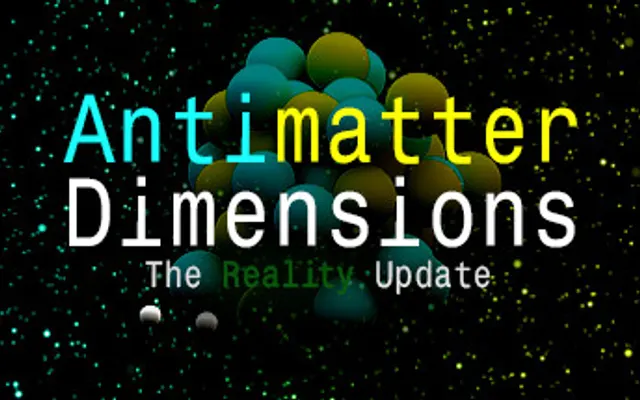
For systems that keep unfolding
Antimatter Dimensions
Recursive production, successive prestige layers, and increasing automation make this a long-term learning project. It is the candidate to investigate when the appeal is discovering how one system changes another. Keep the long estimated commitment and the store's purchase disclosures visible rather than treating a free entry price as the whole decision.
For an interest in notation itself
Road of Big Number Rewritten
The developer describes a move from numerical into ordinal progression. That makes mathematical scale the theme, rather than just a rising balance attached to another setting. We have not independently established a completion time or offline cap, so the recommendation rests on that specific premise, not an invented length estimate.
For watching rather than deciding
Omega Meta Zero
The developer's zero-player description is literal: this is closer to a numerical wallpaper than a game about choosing your next upgrade. That can be exactly the appeal, but it is a poor match if strategic decisions are why you enjoy incrementals. The public repository is archived, which is useful version context rather than a review score.
Depth and interaction are separate
Complicated notation does not necessarily imply complicated decisions. A long list of prestige layers does not tell you how often you need to intervene. Compare the mechanics, the role of automation, and what remains unknown before assuming that every mathematical incremental offers the same kind of depth.
Explore mathematical incrementals →
Take this into your next search
Ask whether you want to understand the system, optimize it, or simply watch it grow. You can enjoy all three, but they are different reasons to open a game.
Research sources checked October 19, 2026. This is a selection, not a claim that these games launched this week or that we completed a fresh playthrough.