Skip to content

For developers

14 Clicker Game Upgrade Ideas, Each Taken From a Real Game That Made It Work

14 clicker game upgrade ideas with the real numbers behind them: click scaling, milestones, synergies, crits, sacrifices and skill trees, from shipped games.

Most clicker upgrade lists stop at 'double click' and 'auto clicker'. Shipped games use a much wider set of upgrade types, and each one solves a specific design problem: keeping clicks relevant late, giving the player a target, making two systems care about each other, or turning a reset into a choice. The fourteen below are upgrade types taken from real games, with the actual numbers where the game or its wiki publishes them.

Use them as a menu. A good clicker usually mixes four or five types, introduced one at a time. Numbers come from the Cookie Clicker wiki, the Antimatter Dimensions wiki, Steam store pages and Anthony Pecorella's 'Math of Idle Games' series, all linked in the sources. One entry is the site maintainer's own game and is labelled.

02

Milestone multipliers at owned counts: best for giving players a number to save for

Platform: Steam, Mobile · free-to-play

In AdVenture Capitalist, owning 25 and then 50 of a business doubles its output, and the bonuses stack. Pecorella's analysis of the game shows why this matters: costs grow 7% per purchase (a growth rate of 1.07 for the Lemonade Stand), so without milestones the 24th stand would feel exactly like the 23rd. With them, the next 25 is a goal.

Milestones are cheap to build and very effective. Show the next threshold on the button with a progress bar, and the player always knows what they are working toward.

Watch out for: Space milestones out more as costs rise. If every milestone takes the same number of purchases, late ones take far longer in real time.

03

Tiered building upgrades: best for a steady drip of cheap, readable upgrades

Platform: Seen in Cookie Clicker on web, Steam and mobile

Cookie Clicker gives each building a ladder of upgrades that each make it twice as efficient, unlocking at 1, 5, 25, 50, 100 and 150 owned. The first farm upgrade, Cheap hoes, needs 1 farm and costs 11,000 cookies; the next, Fertilizer, needs 5 farms and costs 55,000.

This turns every building into its own small progression track. Players always have one upgrade per building that is nearly affordable, and the doubling is easy to understand. It is also how a game with twenty building types stays readable: the rule is the same for all of them.

Watch out for: Doubling upgrades multiply fast. Twelve tiers is a 4,096x multiplier on one building, so plan the cost curve around the end of the ladder, not the start.

04

Synergy and achievement-scaling upgrades: best for making separate systems care about each other

Platform: Seen in Cookie Clicker's grandma and kitten upgrades

A synergy upgrade links two things the player owns. Cookie Clicker's Farmer grandmas make grandmas twice as efficient and give farms +1% production per grandma; later grandma types use slower rates, such as miner grandmas per 2 grandmas and worker grandmas per 3. Suddenly buying grandmas is also a farm decision.

Achievement-scaling upgrades go further. Cookie Clicker's kitten upgrades, such as Kitten helpers, give 'more CpS the more milk you have', and milk grows as you earn achievements. That makes collecting achievements part of the economy rather than a separate checklist.

Watch out for: Synergies create dominant strategies. Test what happens when a player buys only the two linked buildings and ignores the rest.

05

Helpers that click for you, with crits: best for RPG clickers with a party

Platform: Steam, Browser, Mobile · free-to-play

Clicker Heroes by Playsaurus has you click monsters for gold and recruit heroes who deal damage on their own. Its Steam page sums up the feel as 'a never-ending journey of clicks, crits, and colossal damage'. Heroes are the automation, and each one has its own upgrades and skills, so hiring a new hero is a bigger moment than buying another building.

Critical hits are the other idea worth taking: a chance for a click to deal several times its damage. Crit chance and crit multiplier are two cheap, easy-to-read upgrades that make clicking feel lucky without changing the economy much.

Watch out for: Clicker Heroes added rubies, a paid currency, after launch. If you plan a premium currency, design for it from the start rather than bolting it on.

06

One central tool with hundreds of upgrades: best for games built around a single machine

Platform: Browser, Steam · free-to-play

Mr.Mine by Playsaurus is about digging ever deeper. Its Steam page promises you can 'Unlock the power of your drill with hundreds of upgrades', alongside relics and gems. Putting one machine at the centre gives every upgrade a visible place: a faster drill, a bigger fuel tank, a better cooling system.

This pattern works well for themes with a natural hero object: a drill, a ship, a tower, a leaf blower. The player can see their progress in the object itself, which makes upgrades easier to understand than abstract multipliers.

Watch out for: Hundreds of upgrades on one object can become a wall of buttons. Group them into parts (engine, tank, bit) with their own tabs.

07

A spatial skill tree: best for short active incrementals

Platform: Steam · paid

Nodebuster by Goblobin replaces the upgrade list with a big skill tree: you harvest nodes in short runs, then 'Explore the upgrade skill tree' between them. It costs $2.99 and holds 97% positive from about 14,000 Steam reviews.

A tree shows the player the whole shape of the game at once, with locked branches as promises. It also lets you offer choices (which branch next?) without the menus a classic upgrade list needs. Many of the roguelite incrementals that followed use the same layout.

Watch out for: Big trees are hard to balance because everything is visible. Players compare branches openly, so a weak branch gets ignored immediately.

08

Bigger cursor area instead of more clicks: best for sweeping, mouse-driven clickers

Platform: Steam · paid

Keep on Mining! by EagleEye Games swaps clicking for sweeping: you move your cursor over rocks to break them, smelt ores, find artifacts and craft pickaxes, then spend materials in a big skill tree. Its store page calls it 'a short incremental mining game'. It costs $4.99 and holds 91% positive from about 3,100 Steam reviews.

When the input is sweeping, the natural upgrades are area, speed and tool strength rather than click power. That is kinder to wrists than rapid clicking, and it makes upgrades visible: the circle under your cursor literally gets bigger.

Watch out for: Area upgrades can make the screen trivial too fast. Scale the number and toughness of targets with the area, not just their value.

09

Upgrades that unlock a new mechanic: best for games that change shape as they go

Platform: Browser, Mobile · free

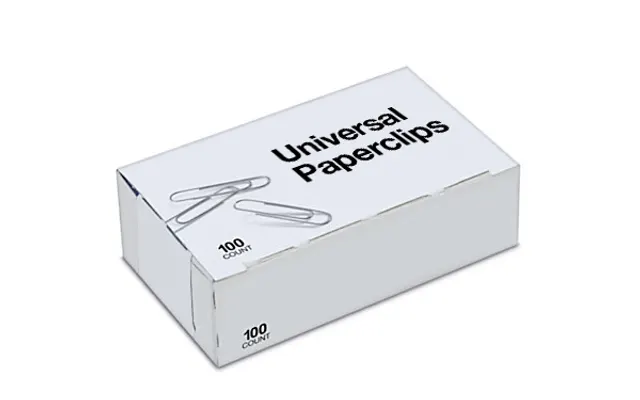
In Universal Paperclips, many upgrades do not make numbers bigger; they add a whole new system. As GamesBeat described it, selling enough paperclips earns the market's trust, which gives you points to increase your processing and memory, and that computing in turn opens new kinds of upgrades. Each act of the game is unlocked by an upgrade that changes what you are doing.

Mechanic-unlocking upgrades are the best defence against the mid-game slump. A new screen, a new resource or a new decision every half hour keeps players curious in a way a 2x multiplier never will.

Watch out for: Every new mechanic needs its own explanation. Unlock them one at a time, and give each a sentence of plain-language text.

10

Sacrifice upgrades: give up some, boost one: best for adding a timing decision without a full reset

Platform: Browser, Steam, Mobile · free

Antimatter Dimensions' Dimensional Sacrifice unlocks after 5 Dimension Boosts. It sets every dimension except the 8th to zero, without resetting your purchases, and in return gives the 8th dimension a multiplier based on how many 1st dimensions you had. The multiplier accumulates across sacrifices, and production recovers quickly.

It is a mini-prestige: a choice about when to give something up, inside a run. Players learn to time it, which adds an active decision to an otherwise idle stretch. Antimatter Dimensions is free and open source, and 92% positive on Steam.

Watch out for: Mini-resets confuse new players. Show the multiplier they would gain before they press the button, as Antimatter Dimensions does.

11

Permanent perks you can respec: best for prestige shops that reward experimenting

Platform: Browser · free

Trimps spends its prestige currency, Helium, on permanent perks when you use the Portal, and its wiki notes that respeccing lets you remove perk levels and convert them back into Helium to spend elsewhere. Its Steam page lists 'Hundreds of perks, talents, and upgrades' and over 50 challenges.

A respec turns the prestige shop into a build the player can tune for each challenge, instead of a one-way list where an early mistake is permanent. It is one of the cheapest ways to add depth to a prestige layer.

Watch out for: Unlimited free respecs remove the decision. Limit them per run or tie them to the reset so choices still matter.

12

A class choice that reshapes every upgrade: best for replayable prestige runs

Platform: Steam, Mobile · free-to-play

Idle Wizard by TwoWizards is an 'RPG/Idle hybrid about becoming the most powerful wizard there is' whose Steam page invites you to 'Pick a class, get a pet, configure and improve your character in a myriad ways'. A class changes which upgrades and spells matter, so the same game plays differently each run.

Class or faction choice is the strongest replay upgrade in the genre; Realm Grinder builds its whole prestige around picking among a dozen factions. Even two or three classes double the life of your upgrade list.

Watch out for: Every class multiplies your balancing work. Ship two well-balanced classes before adding a third.

13 · Ours

Cosmetic upgrades players can see: best for cozy clickers with characters

Platform: Browser, Steam

Mushies! is the site maintainer's own game, so read this as a case study. Its demo page lists twelve shroom companions, each with a name, a house and a job, that you can outfit with hats, plus sunken clothing to find in a pond for dress-up. Alongside the numeric upgrades to buildings and shrooms, these are upgrades the player can see on screen.

Cosmetic upgrades give players something to want that does not break the economy. In a cozy game they are often the reward people remember. Mushies! is upcoming on Steam, with a free browser demo on itch.io.

Watch out for: Cosmetics need art for every variation, which is the expensive part of a small game. Start with a handful and add more in updates.

14

Gear upgrades for the player's tool: best for long-running clickers with crafting

Platform: Steam, Mobile · free-to-play

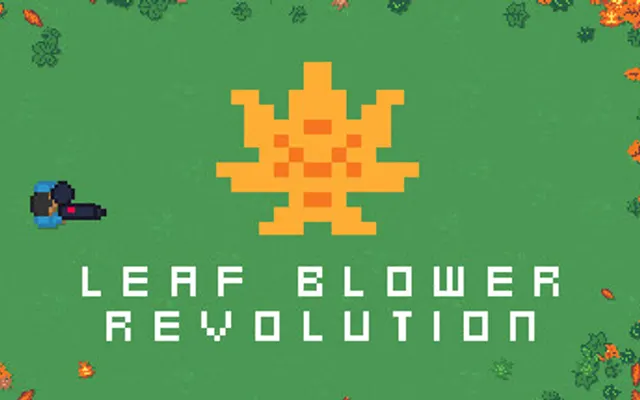
Leaf Blower Revolution by Humble North starts with one leaf blower: 'Blow leaves, upgrade your gear, and automate your progress as you explore the Leaf Universe.' The gear is the upgrade path, and crafting gives players a second economy that feeds it. It is free on Steam and holds 94% positive from more than 26,000 reviews.

Gear with crafted parts gives a clicker an RPG-style loop of collect, craft, equip. It works well when you want sessions to have a small goal (craft the next part) on top of the long climb.

Watch out for: Crafting systems need inventory UI, which balloons. Keep the number of materials small and their uses obvious.

How to choose which upgrades to build

Start with the problem you are solving, not the upgrade you like.

01

Fix the problem you have

Clicks feel pointless: add percentage-of-income click upgrades. Purchases feel samey: add milestones and tiered upgrades. Systems feel separate: add synergies. The mid-game drags: add an upgrade that unlocks a new mechanic. Our design examples guide covers more of these problems.

02

Match the upgrade to the input

If players click, upgrade click power and crits. If they sweep, upgrade area. If they mostly idle, upgrade automation and offline gains. Mismatched upgrades, such as click power in a mostly idle game, get ignored.

03

Introduce one type at a time

Shipped games reveal upgrade types gradually: buildings first, then tiers, then synergies, then prestige. Each new type is a small event. Price them with an exponential formula; our cost scaling guide has the maths, and prestige system examples covers the shop you unlock after the first reset.

Add one new upgrade type this week

Pick the problem your game has right now, choose the matching upgrade type above, and build it with the real numbers as a starting point: x2 at 25 and 50 owned, +1% of income per click, doubling tiers at 1, 5, 25 and 50. Then simulate and tune.

When your game is ready for players, list it free on IncrementalGames.org; if you want extra visibility at launch, Get featured adds a labelled Featured card from $30 a week.

List your game free →

Common questions

What upgrades should a clicker game have?

At minimum: click power, auto-producers, multipliers for each producer, and milestone bonuses. Most successful clickers add synergies between producers, timed or random bonuses, and later a prestige shop with permanent upgrades.

How much should clicker upgrades cost?

Most games multiply the cost of each repeat purchase by a fixed rate: 1.07 for AdVenture Capitalist's Lemonade Stand and 1.15 for Cookie Clicker's buildings. One-off upgrades are usually priced at a multiple of the building's current cost, so they arrive at a steady pace.

How do you keep clicking useful late in a clicker game?

Tie click value to idle income. Cookie Clicker's Plastic mouse line adds a percentage of cookies per second to every click, so clicks scale with the economy instead of being left behind.

What is a synergy upgrade?

An upgrade that makes one thing you own boost another. Cookie Clicker's Farmer grandmas, for example, double grandma output and give farms +1% production per grandma.

Sources