Skip to content

For developers

Idle Game Design: 13 Principles, Each Shown in a Real Game That Does It Well

Idle game design explained through 13 principles, each shown in a real game: phase changes, automation as reward, idle and active builds, caps and endings.

Good idle game design is about managing two things: the next goal the player can see, and the reason to come back once the current goal is met. Exponential costs and a prestige reset are the skeleton, but the games people remember add something on top: the game changes what it is about, automation arrives as a reward, the player chooses how much attention to give, and the game respects the time they spend away.

The 13 principles below are each shown in one real game, using the developer's store page, the game's open-source code or its wiki as evidence, and our catalog for facts like length and endings. One entry is the site maintainer's own game, labelled as ours. For the economy math itself, see our cost formula guide; for resets, prestige system examples.

01

Let the game change what it is about: best for short games that need a memorable arc

Platform: Browser, Mobile · free

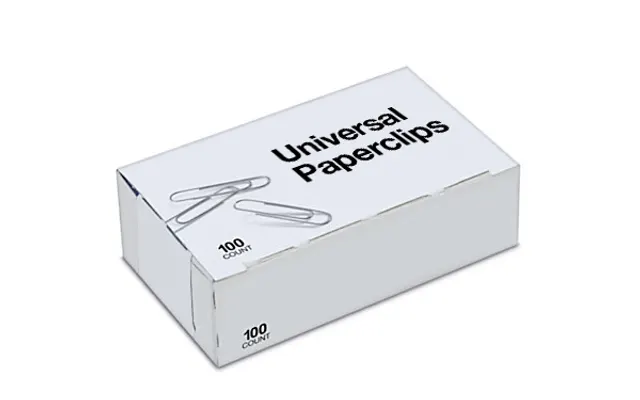
Universal Paperclips starts with one button that makes one paperclip. Wikipedia's account of the game describes how growth plateaus at several points and forces the player to invest in a breakthrough to reach the next phase, how the AI eventually takes over Earth's resources, and how the final act launches self-replicating probes to convert the universe. The interface changes with each phase, so the player is never optimising the same screen for long.

Frank Lantz built it as a free web game in 2017, and Wired reported that 450,000 people played it in the first 11 days, most to completion. Our catalog records it as having an ending, at about 4 to 8 hours.

Watch out for: Phase changes are expensive to build: each one is close to a new game. Plan them on paper first and make each transition visible a little before it happens.

02

Make automation the reward: best for long games where repeated actions pile up

Platform: Browser, Steam, Mobile · free

Antimatter Dimensions turns every tedious action into a future unlock. Its Steam page promises "An obscene amount of automation, including a custom scripting language", and the game gates autobuyers behind its challenges, so beating a challenge removes a chore forever. The player first learns a task by hand, then earns the right to stop doing it.

This is the genre's most satisfying loop: tedium creates the desire, the unlock relieves it, and the next layer brings new tedium. Our catalog records four prestige layers and an ending at roughly 200 to 600 hours.

Watch out for: If automation arrives too late, players quit during the tedium; too early and there is nothing to relieve. Playtest the hour before each autobuyer more than any other hour.

03

Let the player write the automation: best for puzzle and programming hybrids

Platform: Steam · paid

In The Farmer Was Replaced, automation is not bought, it is written. The Steam page says you program a drone in a simple Python-like language to automate farming tasks that would otherwise be very grindy, and that unlike most programming games it has continuous progression rather than levels. Farming earns resources that unlock better technology, including new language features.

The incremental structure gives the programming a purpose, and the programming makes every upgrade a new puzzle. Bitburner does the same with JavaScript in a hacking setting; see our incremental programming games list.

Watch out for: Players arrive with very different coding skill. Offer working examples early and keep the first scripts tiny, or you lose everyone who is not already a programmer.

04

Support both idle and active builds: best for games whose players split into clickers and idlers

Platform: Steam, Browser, Mobile · free-to-play

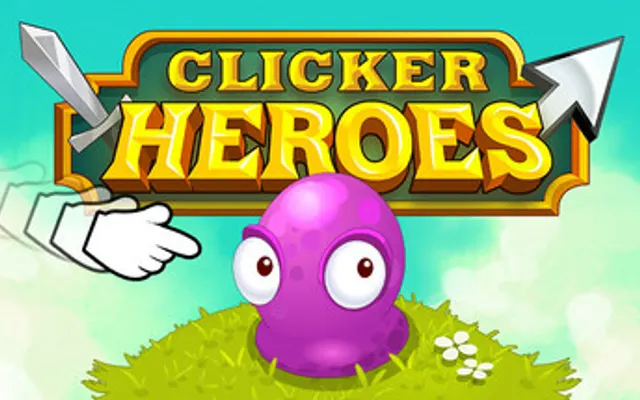
Clicker Heroes lets players choose how they play through its Ancients, permanent upgrades bought with Hero Souls from ascensions. The Clicker Heroes wiki ranks them separately for Idle, Hybrid and Active builds: Siyalatas and Libertas suit idle play, while Fragsworth, Bhaal and Juggernaut reward clicking.

Building both paths into the same system means a player who leaves the game running and one who clicks hard can both feel clever. Our catalog rates Clicker Heroes at 60 on our 0 to 100 idle scale, right between the two.

Watch out for: Two playstyles means two balance curves. If one is clearly stronger, the community will say so in every guide and the other becomes a trap.

05

Create tension with cycles and caps: best for resource management idlers that run for months

Platform: Browser, Mobile · free

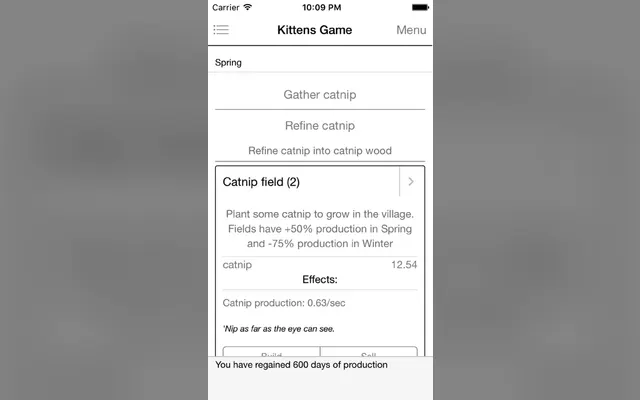
Kittens Game makes its first resource seasonal. In its open-source calendar code, catnip production is multiplied by 1.5 in spring and by 0.25 in winter, so a colony that grows too fast in summer starves in winter. Resources also have storage limits, so the player must build storage before they can save up for big purchases.

Cycles and caps turn pure growth into planning. They give a reason to check in at the right moment and a reason to invest in something other than production.

Watch out for: Caps waste production while the player is away, which can feel like punishment. Show the cap clearly and let players see how long until it fills.

06

Never punish the player for looking away: best for planning games where time is the resource

Platform: Steam · paid

Increlution is a game about running out of time: your character ages, health declines faster, and each death starts a new generation with better instincts. Yet its Steam page notes that when your queue of actions is empty, the game pauses automatically, "so you don't lose any of your precious time".

That one rule makes a high-pressure game safe to leave. The player plans a queue, steps away, and comes back to a paused game instead of a wasted life. Our catalog records an ending at roughly 40 to 100 hours.

Watch out for: Auto-pause can be exploited if the game also counts real time somewhere else. Decide which clock each system uses and keep them consistent.

07

Let the player set the attention level: best for desktop idlers that run during work

Platform: Steam · paid

Rusty's Retirement is designed to sit at the bottom of your screen while you do other things, and it gives the player explicit control over how much it asks of them. The Steam page describes zooming out for a less distracting view, a vertical mode for the side of the screen, and a Focus Mode that slows crop production.

Slowing production on request sounds backwards, but it means the player never feels they are losing by concentrating on their work. Our catalog rates it 95 on our idle scale, one of the most idle games we track.

Watch out for: An always-on game is judged on CPU, memory and battery. Test it running for a full workday on a laptop.

08

Tell a story through the upgrades: best for short narrative clickers

Platform: Steam, Mobile · paid

Spaceplan describes itself as "an experimental piece of interaction based partly on a total misunderstanding of Stephen Hawking's A Brief History of Time." You click and wait to launch potato-based devices from a satellite, and the Steam page promises fifteen items to unlock across five planets and two realities, with a silly story told along the way.

Each upgrade advances the plot, so the number going up is also the page turning. Our catalog records an ending at about 1 to 3 hours, which is the right length for a story told this way. A Dark Room is the text-only classic of the same idea.

Watch out for: Story games are finished once read. Decide early whether you want replay value, and if not, price and describe the game as a short experience.

09

Make the numbers physical: best for games that want to stand out visually

Platform: Steam · paid

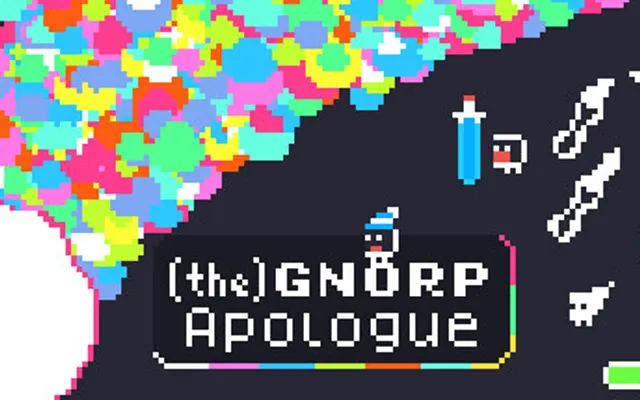
(the) Gnorp Apologue calls itself "a unique incremental game with interesting upgrades, and visuals to match the numbers." When you strike the rock it outputs shards, and the Steam page notes the gnorps must retrieve the shards before they can use them. Production is a visible crowd of little creatures moving resources, not just a counter.

Turning a rate into motion makes upgrades legible: you can see the bottleneck. It also makes the game far more watchable in trailers and streams.

Watch out for: Physical simulation gets expensive as numbers grow. Plan how the visuals scale (more creatures, bigger creatures, or a switch to abstraction) before the late game arrives.

10

Remix the rules with challenges: best for deep games that need variety in the late game

Platform: Browser, Steam · free

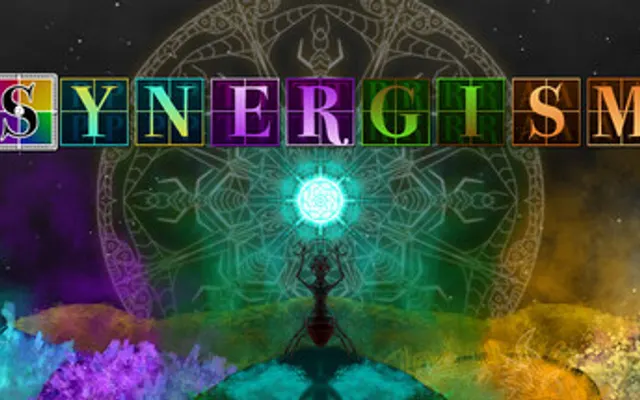
Challenges restart part of the game under a new rule and reward you for finishing. Antimatter Dimensions' Steam page describes "Multiple challenges, ranging from minor alterations to major challenges that forever change the way you play the game", and its open-source code shows the first normal challenges rewarding upgradeable autobuyers. Synergism, a free web and Steam game our catalog tags for challenges, stacks five prestige layers and uses challenges to reshape them.

A good challenge teaches a mechanic the main game glosses over, then rewards it with an upgrade that changes the main game. That turns repetition into mastery.

Watch out for: Challenges that are just the main game with a big multiplier against you feel like grinding. Each one should force a different strategy.

11

Build around short runs: best for roguelite incrementals for short sessions

Platform: Steam · paid

Void Miner, as described in Chris Zukowski's case study, is an asteroids-style shooter where you play until you run out of fuel, then spend your earnings on upgrades that extend the next run. Zukowski calls it a consumable game, enjoyed in short sessions, and credits that with a strong conversion rate from wishlists to sales.

Runs give an incremental a natural session length and a clear moment to spend. They also fit the roguelite audience, who already understand meta-progression. See our roguelite incremental games for more.

Watch out for: Runs that are too long become chores and runs that are too short become noise. Most of the design work is tuning how much one run is worth.

12

Give it an ending, and say so: best for games that should be finished, not abandoned

Platform: Browser · free

Candy Box 2 starts as a counter of candies and turns, in ASCII art, into quests, spells and a lollipop farm, and our catalog records that it ends, at about 5 to 10 hours. It is open source on GitHub. An ending lets players recommend the game as an experience rather than a habit.

If your game ends, say it plainly. Tower Wizard's Steam page lists "Definite ending" as a feature, and our list of incremental games with an ending exists because players filter for it.

Watch out for: An ending is a promise of a satisfying last hour. If the final stretch is the slowest grind in the game, players will remember that instead.

13 · Ours

Decide whether it is played or checked: best for cozy, hands-on clickers

Platform: Browser, Steam

Mushies! is the site maintainer's own game, so read this as one design choice explained, not a recommendation. It is a cozy pixel-art clicker about a mushroom village, built to be played rather than checked: there is no offline progress at all (a code comment says plainly that "Mushies never has offline progress"), one Wisdom prestige loop, and a Steam page that states 3 to 4 hours of play and a definitive ending.

Deciding early whether your game is a check-in habit or a sitting-down experience settles a lot of later questions: offline rules, cap sizes, session length, even the store description. Many design problems in idle games come from trying to be both.

Watch out for: Players who expect the genre's usual offline progress may assume something is broken. State the choice in the game and on the store page.

How to choose which principles your game needs

No game uses all thirteen. Pick by the kind of game you are making.

01

Match it to your session length

Check-in games (minutes at a time, several times a day) need cycles and caps like Kittens Game, fair offline rules, and automation as reward. Sitting-down games need phase changes like Universal Paperclips, a story like Spaceplan, or short runs like Void Miner. Background games need attention controls like Rusty's Retirement.

02

Match it to your audience

Genre veterans want depth: challenges, multiple prestige layers and lots of automation, as in Antimatter Dimensions. Newcomers want clarity: one resource at a time, visible goals, physical feedback like (the) Gnorp Apologue. If you want both, support idle and active builds as Clicker Heroes does, and reveal complexity slowly.

03

Match it to your scope

A solo developer can ship a short game with an ending and one strong idea, like Candy Box 2 or Spaceplan. Systems like scripting (The Farmer Was Replaced) or physical simulation (Gnorp) are big investments that need to be the game's whole identity. Our JavaScript tutorial and engine guide help you size the build.

Write your game's one-line design rule

Before you add another upgrade, write one sentence that says what your game is about beyond numbers going up, in the style of these examples: automation is the reward, the player writes the automation, never punish looking away. Check every new feature against it and cut the ones that do not serve it.

When your game is playable, list it on IncrementalGames.org for free and we will tag the facts players filter by, like length, endings, pace and offline progress. The optional Get featured placement adds a labelled Featured card on the home page, game pages and best-of lists from $30 a week.

List your game free →

Common questions

What makes a good idle game?

A visible next goal, a reason to come back, and something beyond the numbers: a changing game (Universal Paperclips), automation as a reward (Antimatter Dimensions), meaningful choices between idle and active play (Clicker Heroes), or a story (Spaceplan). It should also respect the player's time away.

What are the core mechanics of an idle game?

Resources that grow automatically, purchases whose costs rise exponentially while production rises more slowly, unlocks that reveal new systems, and usually a prestige reset that trades progress for a permanent bonus. Offline progress is common but not universal.

How do you balance active and idle play?

Give each playstyle its own path to power rather than making one simply faster. Clicker Heroes does this with Ancients its wiki ranks separately for idle, hybrid and active builds. Rusty's Retirement goes further and lets players slow the game with a Focus Mode.

Should an idle game have an ending?

It depends on the game. Universal Paperclips, Spaceplan and Candy Box 2 all end, and players recommend them as complete experiences. Long-running games such as Kittens Game do not. If yours ends, say so on the store page; many players look for it.

How long should an idle game be?

Anywhere from an hour to hundreds. In our catalog, Spaceplan runs about 1 to 3 hours, Universal Paperclips about 4 to 8, Increlution about 40 to 100 and Antimatter Dimensions about 200 to 600. Pick a length that matches your scope and say it plainly.

Sources