Skip to content

For developers

13 Prestige System Examples From Real Idle Games, With the Formulas and Design Choices Behind Them

13 prestige system examples from real idle games, with their reset formulas, what carries over, and the design choice each one makes that you can borrow.

Every prestige system answers the same four questions: what triggers the reset, how much currency it pays, what the currency buys, and what survives. The answers decide whether players reset every ten minutes or every ten days, and whether the reset feels like a reward or a punishment. Below are thirteen real systems, each chosen because it answers one of those questions in a distinctive way.

Formulas come from Anthony Pecorella's 'The Math of Idle Games, Part III' (2017), written while he ran browser games at Kongregate, and from game wikis and source code where they publish exact numbers. In Pecorella's notation, lifetime currency is everything earned across runs, max currency is your best single run, and run currency is what you earned since the last reset. The last entry is the site maintainer's own game and is labelled.

02

AdVenture Capitalist: square root, and you can reset anywhere: best for first-time players and mobile audiences

Platform: Steam, Mobile · free-to-play

AdVenture Capitalist's angel investors follow 150 times the square root of lifetime earnings divided by 1e15. Doubling takes three to four times the previous run. Because the formula counts lifetime earnings, Pecorella notes, you can keep resetting at the same point and still gain angels, just with diminishing returns.

Borrow this: a lifetime-based square root is the friendliest formula there is. Players cannot reset 'wrong', and every reset helps. Angels also apply to every business at once, so the effect is obvious in the first minute of the next run.

Watch out for: AdVenture Capitalist lets players buy angels with Gold, its paid currency. Selling prestige currency directly is effective but changes how fair the reset feels.

03

Egg, Inc.: since-reset earnings to a low power: best for frequent, independent runs

Platform: Mobile · free-to-play

Egg, Inc. pays soul eggs based on earnings since the last reset, to roughly the power 0.14 (about a seventh root) by Pecorella's estimate. Doubling your gain needs about 128 times the previous run. Each run stands alone: going further in one run has steeply diminishing returns, so the optimal play is many medium-length runs.

Pecorella argues this suits a game that caps offline earnings: it rewards checking in and resetting often. Egg, Inc. adds a second, scarcer currency, eggs of prophecy, earned from co-op contracts rather than resets, that makes every soul egg stronger. Borrow this: a second prestige currency you cannot farm by resetting gives long-term players a goal outside the loop.

Watch out for: Since-reset formulas punish long absences less, but they also make one big run pointless. Tell players the sweet spot, or they will guess wrong.

04

Realm Grinder: best run, and a choice at every reset: best for strategy-heavy prestige

Platform: Steam, Browser, Mobile · free-to-play

Realm Grinder pays gems based on your maximum earnings: Pecorella derives it as the square root of 1 plus 8 times max coins over 1e12, minus 1, all over 2, which is the inverse of a triangular-number cost. Doubling needs about four times the previous best. It then stacks three layers, abdication, reincarnation and ascension, and abdication is also when you pick your faction for the next run, from about a dozen.

Borrow this: make the reset a decision point. If the player chooses a build, faction or class when they reset, the reset stops being downtime and becomes the most interesting moment in the game.

Watch out for: Choice multiplies balancing. Realm Grinder's faction meta is famously deep, which is great for veterans and daunting for newcomers; a recommended pick helps.

05

Clicker Heroes: currency from what you bought: best for RPG clickers with boss gates

Platform: Steam, Browser, Mobile · free-to-play

Clicker Heroes ties its prestige currency, Hero Souls, to progress rather than gold: Pecorella notes that it is based on hero upgrades purchased, and because upgrade costs grow exponentially, this effectively takes a log of the growth curve. Primal bosses after level 100 also drop souls. You Ascend to collect them and spend them on Ancients, permanent characters with their own bonuses.

Borrow this: paying for milestones reached (levels, bosses, upgrades) instead of money earned keeps prestige gains in a small, readable range even when gold reaches absurd numbers.

Watch out for: Ancients that favour idle or active play split the player base. Make sure both styles have a viable path, or one will feel like a trap.

06

Antimatter Dimensions: each layer triggers at 1.80e308 of the last: best for deep, multi-layer games

Platform: Browser, Steam, Mobile · free

Antimatter Dimensions uses one threshold over and over. At 1.80e308 antimatter you Big Crunch for an Infinity Point. At 1.80e308 Infinity Points you can Eternity for Eternity Points; the wiki says that at exactly that threshold the base gain is about 1.62, and each further factor of 1e308 multiplies it by 5. Each layer resets the ones beneath it, and Reality follows Eternity.

Borrow this: automate the lower layer before the next one arrives. By the time players reach Eternity, Infinities can be automated, so the new layer adds decisions instead of repetition. The source is MIT-licensed on GitHub if you want to see how.

Watch out for: Layer gaps get long. The stretch before the first Eternity is the most common place players quit; give them a visible goal inside it.

07

Kittens Game: thresholds that tell you when to reset: best for slow strategy games

Platform: Browser, Mobile · free

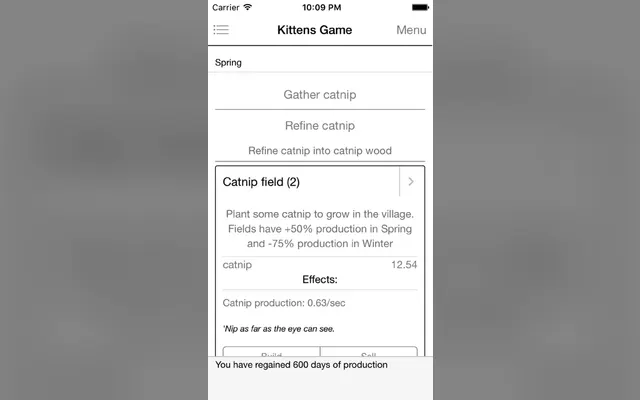
Kittens Game spells out its reset rules in the confirmation dialog. In its own text, resetting with fewer than 35 kittens gives 'NO BONUS points'; at 60 or more you 'receive extra happiness bonus'; at 70 or more you get 'extra happiness and bonus to production'. The currencies, karma and paragon, are spent in a panel called Metaphysics.

Borrow this: put the thresholds in the UI. Instead of making players reverse-engineer the formula, Kittens Game tells them the minimum and the next milestone at the moment of decision. It is free in the browser and its source is on GitHub.

Watch out for: Visible thresholds become targets. If 70 kittens is the line, every player resets at exactly 70; design the next threshold before they get there.

08

Evolve: resets as story events with their own currencies: best for narrative or simulation games

Platform: Browser, Mobile · free

Evolve's first reset is Mutual Assured Destruction: you blow up your civilisation and gain Plasmids, scaled by your living citizens and the knowledge spent on techs. The second, bioseeding a new world with a Genesis Ship, gives Plasmids and a second resource, Phage, and lets you pick a new planet. Later resets follow other paths.

Borrow this: let different endings pay different currencies. Each reset type then becomes a goal of its own, and players plan whole runs around which ending they want. Evolve is free and MPL-2.0 licensed.

Watch out for: Many reset types means many explanations. Evolve leans on community guides; ship a clear in-game description for each.

09

The Prestige Tree: layers you can see, softcaps you can toggle: best for number-heavy browser games

Platform: Browser · free

The Prestige Tree by Jacorb90 draws every layer as a node in a tree. Resetting a node resets the nodes beneath it, and branches let players choose which layer to push next. Its code has a dedicated softcap function, and the game offers an option to show a 'Softcap Node' once you earn an achievement, so players can see when gains are being damped.

Borrow this: make the structure visible. A map of layers turns an abstract system into something players can plan around, and The Modding Tree template lets you build exactly this without starting from scratch.

Watch out for: Twenty layers is a lot. Most tree games that copy the structure feel like reskins; vary what each layer does, not just its name.

10

Increlution: the reset happens to you: best for life-sim and loop games

Platform: Steam · paid

In Increlution by Gniller, the player does not choose to reset. Your character's health declines faster over time until they die, and 'death merely marks a new beginning'. Instinct levels persist through death and permanently improve every later life, while generation levels give a bigger, temporary boost within a life.

Borrow this: a forced reset removes the 'when should I prestige?' anxiety entirely and replaces it with 'how far can I get this time?'. Splitting gains into permanent and per-life tracks keeps each life satisfying even when the permanent gain is small.

Watch out for: Forced resets feel unfair if the player cannot see them coming. Show the countdown, or the age, clearly.

11

Trimps: a portal, a respec and a challenge picker: best for games with many challenge runs

Platform: Browser · free

Trimps' reset is the Portal, which sends you back to the start to spend Helium on permanent perks. Its wiki notes perks can be respecced back into Helium, and its Steam page lists over 50 challenges that tweak the universe. The portal is also where you pick the rules for the next run.

Borrow this: combine the reset, the build and the challenge into one screen. Every reset becomes a short planning session, which is what keeps Trimps players around for hundreds of runs.

Watch out for: A combined screen gets crowded. Default to the last run's settings so a quick reset stays quick.

12

Universal Paperclips: one prestige, at the very end: best for short games with an ending

Platform: Browser, Mobile · free

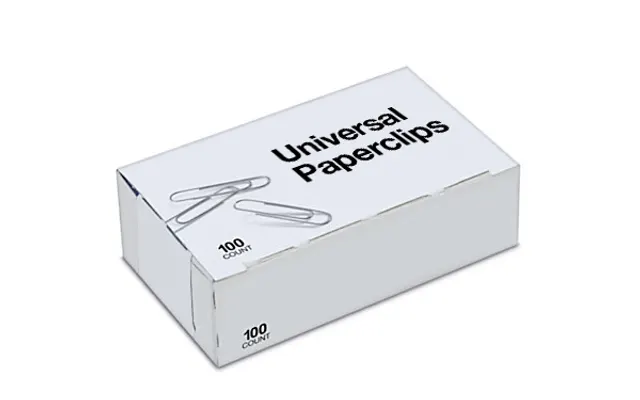
Universal Paperclips has no repeating prestige. When the universe is consumed, the player chooses: finish converting everything, or accept an offer to be sent to a parallel universe and restart with a bonus to creativity or public demand.

Borrow this: a single, optional reset at the end works as both an epilogue and a New Game Plus. It respects players who want to stop, and gives the rest a reason to see the story again with a twist.

Watch out for: Most players stop at the ending, so do not hide important content behind the optional restart.

13 · Ours

Mushies!: RESHROOM, trading the village for wisdom: best for cozy games where the reset needs to feel kind

Platform: Browser, Steam

Mushies! is the site maintainer's own game, so take this as a case study rather than a neutral pick. It is a cozy pixel-art clicker, built in Godot, about a mushroom village with named worker shrooms. Its prestige, RESHROOM, is described on the demo page as: 'trade the whole village for permanent wisdom and grow it again, better.'

The design problem in a cozy game is that players get attached to what they built, so a reset can feel like a loss. Framing it as the village passing on wisdom, inside a short game with a definitive ending (the Steam page estimates three to four hours), keeps it a reward. It is upcoming on Steam with a free browser demo on itch.io.

Watch out for: It is upcoming, so this describes the design intent and demo, not a finished, tuned system.

How to choose a prestige system for your game

Three decisions cover most of the design space.

01

Pick the formula's basis

Lifetime earnings (Cookie Clicker, AdVenture Capitalist) tie each run to all previous ones and forgive bad timing. Max earnings (Realm Grinder) reward record runs. Since-reset earnings (Egg, Inc.) make every run independent and favour frequent resets. Milestones reached (Clicker Heroes) keep currency small and readable. Our cost scaling guide covers the matching cost curves.

02

Pick the exponent

Square root: doubling takes 3 to 4 times the previous run. Cube root: about 8 times. A seventh root: over 100 times. Lower exponents mean rarer, bigger resets. Pecorella recommends varying reset timing and multipliers to create a 'bumpy' pattern rather than a flat one.

03

Pick what the reset means

A number (angels), a shop (heavenly upgrades), a choice (factions, classes, challenges), a story (Evolve, Paperclips) or a life (Increlution). The more meaning, the more players look forward to it. For more upgrade types to put in the prestige shop, see clicker game upgrade ideas.

Prototype your reset in a spreadsheet first

Pick a basis and an exponent from the examples above, simulate three runs in a spreadsheet, and check that the second run is visibly faster within minutes. Pecorella's Part III includes a spreadsheet model you can start from.

When your game is ready for players, list it free on IncrementalGames.org; if you want extra visibility at launch, Get featured adds a labelled Featured card from $30 a week.

List your game free →

Common questions

What is a prestige system in games?

A voluntary reset that trades current progress for a permanent bonus that makes future runs faster. In idle games it usually pays a prestige currency, such as Cookie Clicker's heavenly chips or AdVenture Capitalist's angel investors.

How do you calculate prestige currency?

Most games take a root of earnings. AdVenture Capitalist uses 150 times the square root of lifetime earnings over 1e15; Cookie Clicker uses the cube root of lifetime cookies over 1e12; Egg, Inc. uses roughly the 0.14 power of earnings since the last reset.

How often should players prestige?

It depends on the formula. Since-reset formulas like Egg, Inc.'s favour frequent resets; lifetime cube-root formulas like Cookie Clicker's favour rare ones. A common design target is that the first reset should roughly double the player's speed.

How many prestige layers should an idle game have?

One is enough for a short game. Long games like Realm Grinder (three) and Antimatter Dimensions (Infinity, Eternity, Reality and beyond) add layers over months of content. Add a layer only when the one below it can be automated.

Sources