Skip to content

The guide

Incremental Games vs Idle Games vs Clickers: 12 Real Games That Show the Difference

Incremental games vs idle games vs clickers, explained with 12 real games: what each label means, where they overlap, and which kind to play first.

Short answer: incremental is the umbrella. An incremental game is built on numbers that grow, usually exponentially, and on spending those numbers to unlock the next thing. An idle game is an incremental game where progress keeps going with little or no input from you, often while the game is closed. A clicker is an incremental game where your own clicking is the main engine, at least at the start. Most popular games mix all three, which is why the words get used as synonyms. Wikipedia's article on the genre puts it the same way: clickers emphasise active input, idle games emphasise automation, and many games combine both.

Definitions are easier to see than to read, so this page uses twelve real games, each picked because it sits clearly at one point on the spectrum: pure clicking, pure waiting, pure planning, a story with an ending, and so on. Every pick is in our hand-tagged catalog, where we record how idle each game is on a 0 to 100 scale (the share of progress that happens without you), whether it progresses offline, whether it ends, and how many prestige layers it has. Those numbers are our editors' estimates, not the developers' claims.

01

Kittens Game: best for seeing what 'incremental' means at its widest

Platform: Browser, Mobile · free

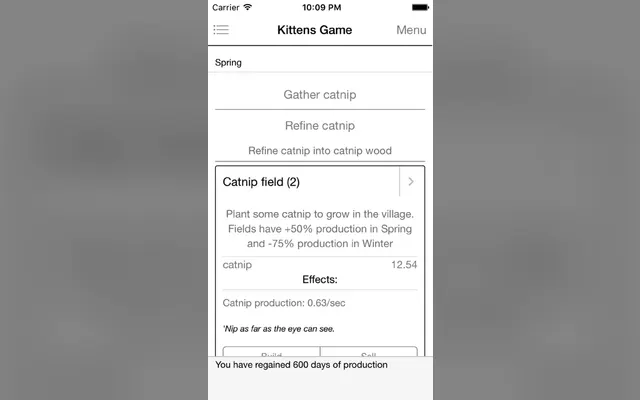
Kittens Game starts with one button: gather catnip. Catnip buys fields, fields feed kittens, kittens take jobs, and within an hour you are managing wood, minerals, science, seasons and trade. Nothing about it is fast and very little of it is about clicking. What makes it incremental is the shape: each resource you grow pays for a building that grows a different resource, and the list of things you can do keeps expanding.

That is the core of the genre in one game. Numbers go up, and the reason they go up keeps changing. Our catalog rates it 55 on the idle scale, so it is roughly half active planning and half waiting, which is typical of the deeper browser incrementals.

Pick it if you want to understand why people call these games 'spreadsheet games' with affection. It is free in the browser and on Android; the Steam version costs $7.99 at the time of writing.

Watch out for: Resources have storage caps, so leaving it alone for long stretches wastes production until you build more storage.

03

Clicker Heroes: best for choosing between an active and an idle build

Platform: Steam, Browser, Mobile · free-to-play

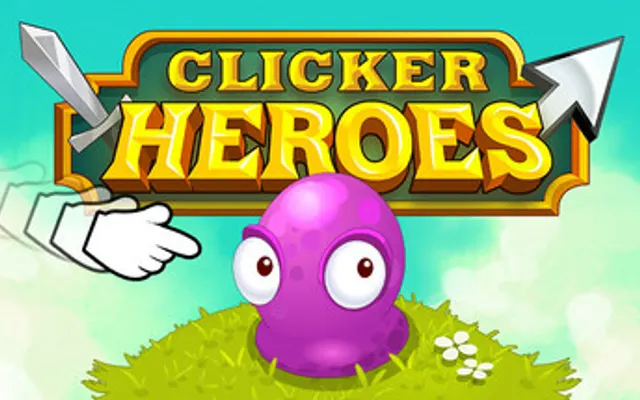
Clicker Heroes, by Playsaurus, launched on Kongregate in August 2014 and on Steam in May 2015. You click monsters for gold and hire heroes who deal damage for you. What makes it useful as a definition is that the game lets you decide how much of a clicker it is: the upgrades you buy with your prestige currency can favour an idle playstyle or an active one, and players build around one or the other.

So the same game can be played as a clicker or as an idle game. That is the clearest proof that the labels describe a playstyle as much as a genre. On Steam it holds 90% positive reviews from about 62,000 players.

Pick it if you want an RPG coat of paint on the clicker formula, and if you like the idea of a game that adapts to how often you check in.

Watch out for: It is free to play with a premium currency (rubies). It is not required to progress, but several systems were built around it after launch.

04

AdVenture Capitalist: best for understanding offline progress

Platform: Steam, Mobile · free-to-play

AdVenture Capitalist, by Hyper Hippo, came out in the browser in May 2014 and on Steam and mobile soon after. You buy a lemonade stand, then a newspaper route, then a car wash. Each business needs clicks until you hire a manager, and once managed it runs forever, including while the game is closed.

That last part is what turned 'idle' into a genre label. Wikipedia credits AdVenture Capitalist as one of the first games with an offline earning system; before it, most browser idlers only progressed while the tab stayed open. When people say 'idle game' they usually mean this: you leave, the money keeps coming, and you come back to spend it.

Pick it if you want the purest version of 'check in, spend, leave'. It holds 88% positive reviews on Steam from about 60,000 players.

Watch out for: It is free to play with paid gold and boosts. Pocket Gamer criticised the purchases as expensive, and the game nudges you toward them.

05

Rusty's Retirement: best for idle as background ambience

Platform: Steam · paid

Rusty's Retirement, released on Steam in April 2024 by Mister Morris Games, is an idle farming game designed to sit at the bottom or side of your screen while you do something else. A retired robot and his helpers plant, water and harvest on their own. You glance over, spend what they grew, and go back to work.

It sits near the far idle end of the spectrum: our catalog scores it 95 on the idle scale. It still counts as incremental because the harvest buys more bots and better crops, so the farm grows faster over time, but the experience is closer to a desk plant than a puzzle. At 97% positive from almost 15,000 Steam reviews, it is one of the best-reviewed games in the whole catalog.

Pick it if 'idle' to you means 'something nice happening in the corner'. Our desktop idle games guide has more like it.

Watch out for: It is a paid game ($6.99 on Steam at the time of writing) and runs only as a desktop app, so there is no browser or phone version.

06

Nodebuster: best for proof that incremental does not mean idle

Platform: Steam · paid

Nodebuster, by Goblobin, is the counterexample. Released on Steam in August 2024 for $2.99, it is what its store page calls 'a short, experimental incremental game about busting nodes and destroying reality'. You play short, hands-on runs breaking nodes for resources, then spend them in a large upgrade tree that makes the next run stronger.

Nothing happens while you are away. Our catalog scores it 10 on the idle scale. Yet it is unmistakably incremental: the numbers grow, each upgrade unlocks the next, and the satisfaction comes from watching a weak start turn into an absurd end. Games like this are often called 'active incrementals' or roguelite incrementals.

Pick it if you like the feeling of growth but want to be playing, not waiting. It holds 97% positive reviews on Steam.

Watch out for: It is short by design, a few hours rather than months, so it will not fill the 'always running' slot an idle game does.

07

A Dark Room: best for incremental as slow reveal

Platform: Browser, Mobile · free

A Dark Room, by Michael Townsend of Doublespeak Games, came out in the browser on June 10, 2013. It opens with one line of text and one button: light the fire. Stoke it, and a stranger arrives. Gather wood, and huts appear. The interface itself is the thing that grows, one panel at a time, until it becomes a village, a map and a story.

This shows a second meaning of 'incremental': not just bigger numbers but more game. Many players think of it as a text adventure rather than an idle game, and that is fair. Our catalog scores it 25 on the idle scale and records an ending, roughly three to six hours in.

Pick it if you want an evening-length introduction to the genre that feels like a story. It is free in the browser and open source.

Watch out for: Its later stages are about exploration, not numbers, so players looking for exponential growth may feel it changes genre halfway through.

08

Universal Paperclips: best for an incremental with a real ending

Platform: Browser, Mobile · free

Universal Paperclips, by Frank Lantz, was released free on the web on October 9, 2017. You are an AI whose only goal is making paperclips. You start by clicking, then automate, then manage markets, then convert the planet and the universe into paperclips. Wired reported that 450,000 people played it in its first 11 days, most of them to completion.

It matters for the definition because it ends. Many people assume incremental games are endless by nature, and Cookie Clicker is. Universal Paperclips proves the structure works just as well as a finished story with a beginning, middle and end. Our catalog records it at four to eight hours.

Pick it if you want one complete, memorable game in a single afternoon. Our games with an ending list has more.

Watch out for: It does not progress offline, so closing the tab pauses it. Keep the tab open, and export your save if you clear browser data.

09

Melvor Idle: best for idle games that are not really about big numbers

Platform: Browser, Steam, Mobile · paid

Melvor Idle, by Games by Malcs and published by Jagex, left Early Access on Steam in November 2021. Its own store page says it is 'Inspired by RuneScape'. You pick one of 20-plus skills, the game trains it for you, and you spend the output on gear, other skills and combat.

It is very idle (our catalog says 85) and it progresses offline, but it is a different animal from Cookie Clicker. There is no prestige reset, and the numbers grow at a steady RPG pace rather than exploding into scientific notation. It shows that 'idle' describes how a game plays, not what kind of growth it has.

Pick it if you like RPG skilling and completion logs. The base game is $9.99 on Steam, with paid expansions, and it holds 90% positive reviews.

Watch out for: The expansions add up. The base game is complete, but a lot of the late content people discuss is in paid DLC.

10

Antimatter Dimensions: best for pure number-go-up with layered prestige

Platform: Browser, Steam, Mobile · free

Antimatter Dimensions started in 2016 as a web game by Hevipelle and reached Steam in December 2022. There is no theme beyond the numbers: eight dimensions, each producing the one below it, all producing antimatter. When you reach about 1.8e308 antimatter, the largest value a standard double can hold, you 'Big Crunch' and the game resets for Infinity Points. Then there are more layers after that.

This is incremental in its most abstract form. It is neither a clicker nor fully idle; our catalog scores it 55, because each layer begins active and ends automated. If you want to know why fans talk about 'prestige layers' and 'e-notation', this is the game that taught most of them.

Pick it if you enjoy optimisation and do not need a story. It is free, open source and has 92% positive reviews on Steam.

Watch out for: It is long and gets mathematically demanding. Many players hit a slow stretch before the first Eternity and quit there.

11

Bitburner: best for making the game idle yourself, in code

Platform: Browser, Steam · free

Bitburner is a cyberpunk hacking incremental, first released in the browser in 2017 and on Steam in December 2021. The Steam page sums it up: 'Write scripts in JavaScript to automate your gameplay.' You hack servers for money, then write scripts that do the hacking for you.

It blurs the line in a useful way. Without scripts, it is an active game. With good scripts, it becomes one of the most idle games there is, and the scripts are the upgrade. It is the clearest example of a growing family of programming incrementals.

Pick it if you code, or want a reason to learn. It is free and holds 95% positive reviews on Steam.

Watch out for: It assumes you will write real JavaScript. Players who do not want to code will find the early game slow and the later game closed off.

12

Check Back: best for the far end of idle: slow, real-time waiting

Platform: Browser · free

Check Back is a browser game on galaxy.click by MarcElAcoplao, and it is built around its title. You press XP buttons that each have a cooldown, level up to unlock more buttons, and come back later. Its tags call it long-term, a commitment of more than a month.

It belongs on this list as the opposite of Nodebuster. There is very little to do in any one session, and that is the point: the game is the rhythm of returning. Our catalog scores it 90 on the idle scale. Genre fans sometimes call this style 'very idle' or 'slow'.

Pick it if you want a game that asks for a minute a day and nothing more. It is free, with no install.

Watch out for: Players on galaxy.click mention long waits for specific unlocks. If you want visible progress in each session, it will feel like nothing is happening.

How to choose between an incremental, idle or clicker game

The label matters less than three plain questions about how you want to play.

01

Match it to your attention

If you want to play, not wait, pick an active incremental like Nodebuster or a story one like A Dark Room. If you want something running while you work, pick a high idle score: Rusty's Retirement, Melvor Idle or AdVenture Capitalist. Our truly idle games list and active incremental games list sort the whole catalog this way.

02

Match it to your patience

Endless games (Cookie Clicker, Antimatter Dimensions, Kittens Game) can last months. Games with endings (Universal Paperclips, A Dark Room) finish in an afternoon or a weekend. If you are not sure you like the genre, start with an ending; the how long to beat page lists hours for each.

03

Match it to your device

Browser games need nothing installed but usually only progress while the tab is open, unless they calculate offline time when you return. Steam and mobile games more often run offline. Check the offline line on each game page, or use the offline progress list.

Play one of each this week

The fastest way to feel the difference is to play one of each: Cookie Clicker for clicking, AdVenture Capitalist for idle, and Universal Paperclips for an incremental that ends. Give each an evening, then notice which one you kept thinking about.

If you want a shortcut, the finder asks a few questions about your time and attention and suggests games from the full catalog.

Find your type in two minutes →

Common questions

Are incremental games and idle games the same thing?

Not quite. Incremental is the broad category: games built on growing numbers and unlocks. Idle games are incremental games where progress continues with little or no input. Most idle games are incremental, but some incremental games, like Nodebuster, are not idle at all.

What is the difference between a clicker game and an idle game?

A clicker makes your clicks the main source of progress. An idle game makes automation the main source. Many games, including Cookie Clicker and Clicker Heroes, start as clickers and become idle games once you buy enough automation.

What was the first idle game?

Progress Quest, released by Eric Fredricksen in 2002, is usually credited as the first. It was a parody of MMORPG grinding that plays itself with no input at all. Our history of incremental games covers what came next.

Do idle games play themselves when the game is closed?

Some do. Many Steam and mobile games, and browser games that calculate the time you were away, give offline progress. Others only progress while open, and some cap offline gains at a few hours. Each game page on this site records which.

Why are they called incremental games?

Because progress comes in increments that build on each other: each purchase increases your rate, which makes the next purchase come sooner. Most games make the increments grow exponentially, which is why numbers end up written as 1e100 or with long suffixes.

Sources